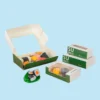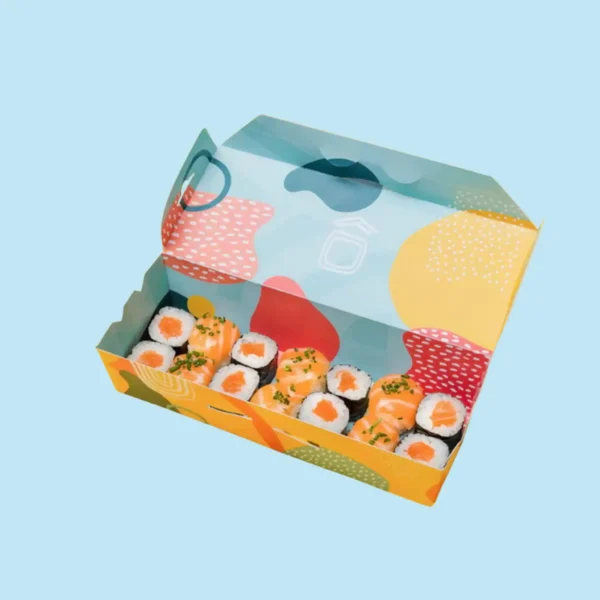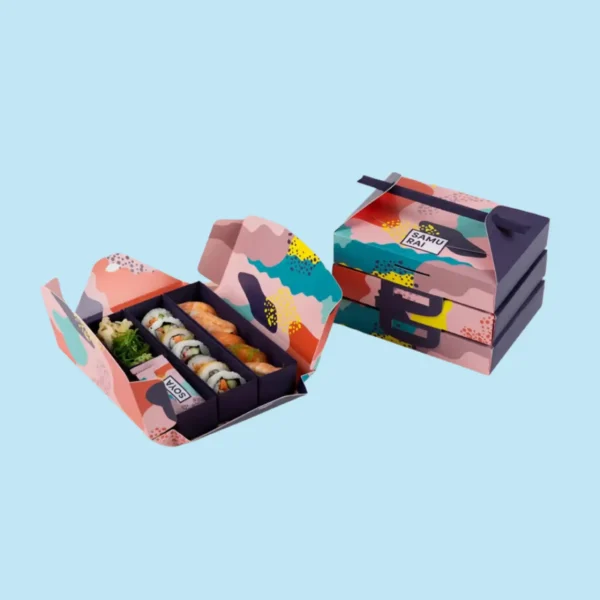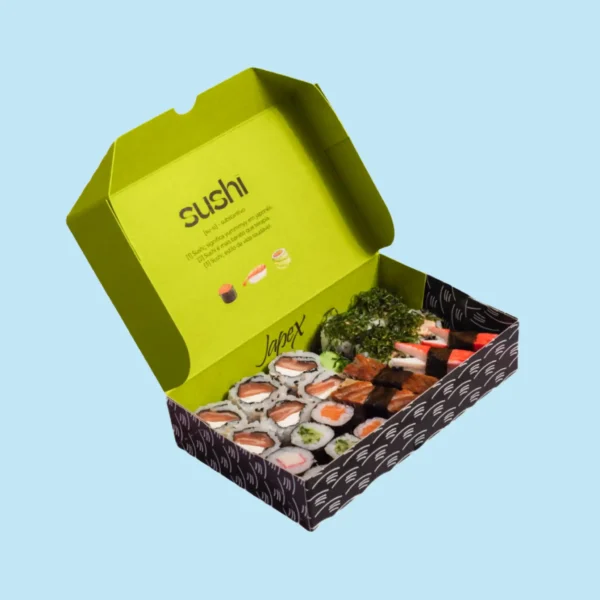
Package sushi rolls, nigiri, sashimi, hand rolls, bento selections, and catering platters in custom sushi boxes designed around portion size, arrangement, moisture, sauces, refrigeration, and delivery conditions. Choose paperboard cartons, kraft boxes, black trays, clear lids, fitted inserts, divided compartments, condiment spaces, tamper-evident closures, custom printing, and premium finishes. Prime Custom Packaging offers zero MOQ, free structural and artwork support, flexible production options, and free shipping throughout the USA.


Sushi packaging must protect careful food presentation while supporting refrigeration, takeaway service, and local delivery. Rolls, nigiri, sashimi, hand rolls, and bento combinations can shift, dry out, collect condensation, or absorb unwanted moisture when the packaging is poorly matched to the meal.
Prime Custom Packaging creates custom sushi boxes around the exact portion, food arrangement, tray depth, sauce placement, and delivery method. Restaurants can customise dimensions, materials, lids, compartments, inserts, printing, finishes, and closures without relying on one standard container.
Our sushi boxes can support individual rolls, combination meals, party platters, supermarket displays, catering orders, and recurring meal programmes. Furthermore, businesses can coordinate several sizes under one consistent visual identity.
Whether you need a compact custom sushi boxes design for individual lunch orders or larger formats for catering and wholesale service, the packaging can be developed around the actual meal.
A properly fitted box for sushi helps reduce movement, protect garnishes, and keep rolls aligned. Additionally, secure sushi containers can separate sauces, ginger, wasabi, and chopsticks from the main food area.
Zero MOQ supports independent restaurants, food trucks, cloud kitchens, supermarkets, caterers, and expanding food-service businesses. Moreover, free structural and artwork assistance helps identify packaging issues before production.
In our manufacturing experience, sushi presentation usually remains more stable when the tray closely follows the food layout instead of leaving one large open compartment.
Request a free quote and create sushi packaging that protects presentation, improves takeaway handling, and supports your restaurant brand.
The packaging process should begin with the finished meal arrangement rather than the individual roll diameter alone.
Measure the complete sushi set at its widest and tallest points. Then confirm the number of rolls, nigiri pieces, sashimi slices, side items, sauces, garnishes, and utensils included in each order.
A sushi roll box may need several aligned channels or one wide tray. Meanwhile, nigiri boxes require enough headroom to protect toppings without leaving excessive vertical space.
A sashimi box usually needs a wider open area because slices may be arranged over garnish, shredded vegetables, ice packs, or decorative leaves. Accordingly, sashimi packaging should support presentation without compressing the food.
Sushi platter boxes for catering may require reinforced bases, wider lids, and better lifting support. Furthermore, sushi combo boxes may need several sections for rolls, nigiri, sashimi, and sides.
A compact sushi meal box can support individual lunch orders, while larger sushi party boxes can hold shared selections for events and family meals.
In our manufacturing experience, measuring the fully arranged meal prevents common problems such as lid contact, wasted space, and sauce cups pressing against the sushi.
Sushi packaging can use paperboard cartons, kraft structures, plastic trays, clear lids, tray-and-sleeve systems, or hybrid packaging.
| Packaging format | Best use | Main advantage | Important consideration |
| Black tray with clear lid | Retail display and takeaway | Strong colour contrast and full visibility | Condensation may remain visible |
| Paper sushi box | Branded takeaway and delivery | Large printable surface | May require a moisture barrier |
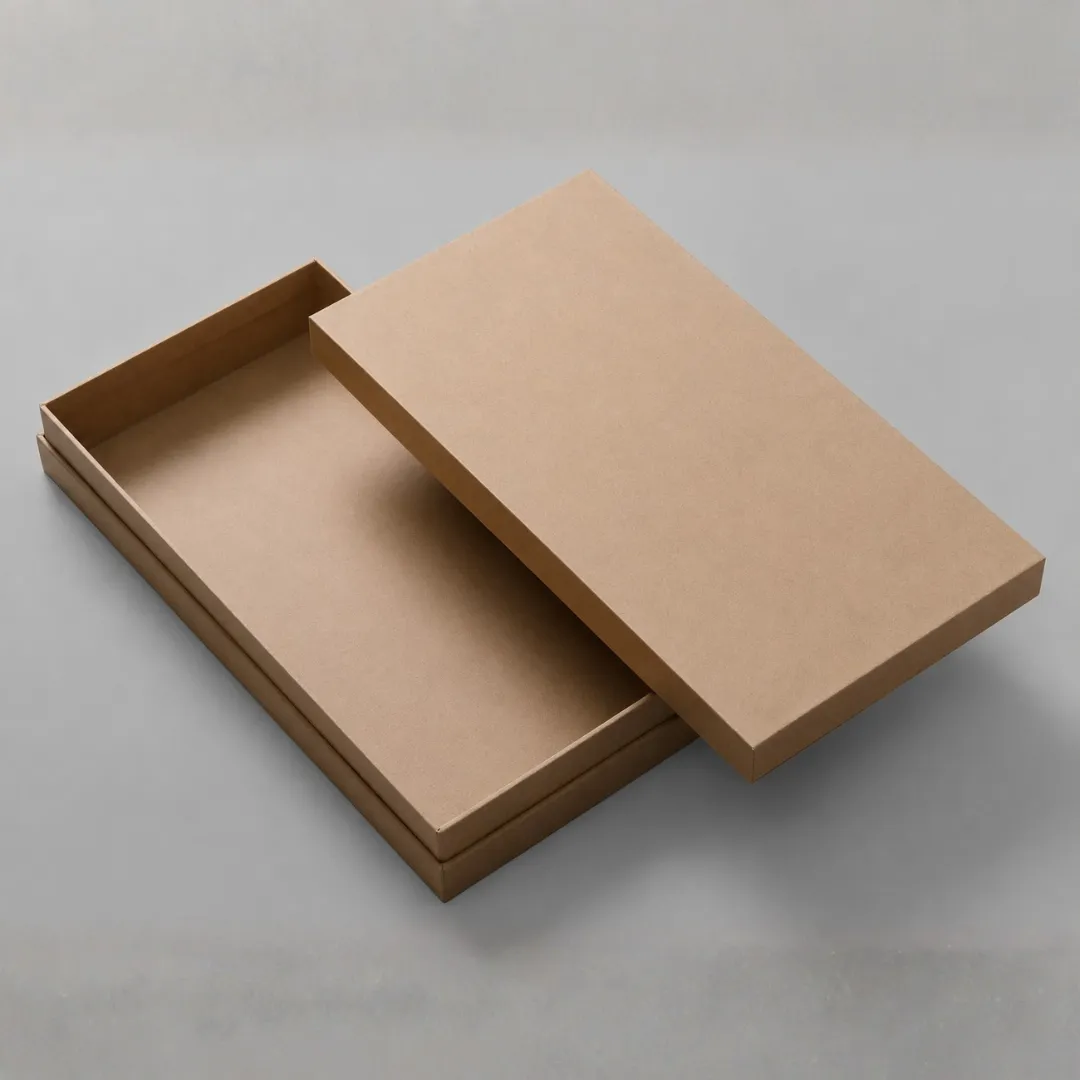
| Kraft sushi box | Natural restaurant branding | Warm appearance and compact storage | Light print colours may look muted |
| Divided tray | Combo meals and bento | Separates sauces and side items | Compartments must match portions |
| Rigid presentation box | Gifting and premium catering | Strong structure and luxury appearance | Higher cost and storage demand |
| Foldable carton | Restaurants and food trucks | Ships flat and saves storage space | Assembly speed should be tested |
A sushi to go box should be easy for staff to assemble, fill, seal, and stack during busy service periods.
The phrase sushi togo box may appear in supplier searches, but the actual structure should still be selected according to the food quantity, refrigeration method, and delivery time.
A sushi takeaway box may use a clear lid for visibility, while a printed carton can offer more branding space. In addition, sushi takeout boxes may include locking tabs or tamper labels.
Plastic sushi trays can provide strong moisture resistance, while paperboard sushi boxes offer more print coverage. Consequently, some restaurants use a hybrid tray and sleeve system.
In our manufacturing experience, tray-and-lid formats perform best when the lid locks firmly without placing pressure on the food arrangement.
Movement is one of the most common causes of poor sushi presentation.
Sudden braking, turning, stacking, and repeated lifting can cause rolls to tip, nigiri toppings to shift, or garnishes to spread across the tray.
Sushi boxes with compartments can help separate product types and control side-to-side movement. Likewise, sushi containers with compartments may hold rolls, sides, and sauces in one organised meal.
Sushi boxes with inserts can use folded channels, removable platforms, trays, or food-safe separators. These features can help keep each row aligned.
Divided sushi boxes may work well for combo meals, while sushi trays with compartments can support several products without requiring separate containers.
A compartment sushi container should provide enough space for each item without creating oversized cavities. Furthermore, stackable sushi containers should have flat lids and aligned corners.
Protective sushi boxes may use reinforced bases, secure closures, and close-fitting trays. Spill-resistant sushi containers can also help contain loose sauces and moisture.
In our manufacturing experience, sushi damage usually begins with internal movement rather than failure of the outer packaging.
Visibility matters because sushi is highly visual. Customers often judge freshness, arrangement, colour, and portion size before opening the container.
Sushi boxes with clear lids combine protection with direct product visibility. Clear lid sushi containers can display rolls, nigiri, sashimi, and garnish while keeping the meal covered.
A sushi container with clear lid may use a snap-fit, tuck-lock, hinged, or separate lid design. Additionally, clear top sushi containers can be paired with black, white, kraft, or printed bases.
Sushi trays with lids should allow enough height for toppings and garnish. Clear sushi boxes and transparent sushi containers can also support supermarket displays and grab-and-go counters.
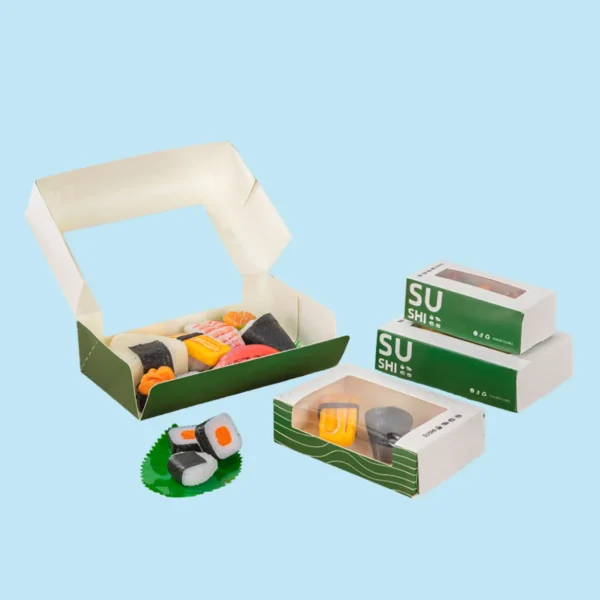
Sushi display boxes may use large windows instead of a fully clear lid. Similarly, sushi boxes with windows can combine branding space with product visibility.
A sushi window box should retain enough board around folds and locking tabs. For comparison, our Bakery Boxes with Window show how clear display areas can be balanced with panel strength, although chilled-food packaging requires different moisture considerations.
Sushi takeaway containers with lids should also be checked for condensation. Cold food and changing temperatures may cause moisture droplets inside the clear surface.
Moreover, clear lids should remain high enough to avoid touching garnishes or toppings while still fitting closely enough to support stable stacking.
In our production experience, shallow lids often show less empty condensation space and can keep the presentation looking more controlled.
Sushi packaging must perform around chilled rice, fish, vegetables, sauces, and refrigerated storage.
Moisture-resistant sushi boxes may use coated paperboard, plastic trays, liners, films, or suitable internal barriers. However, moisture performance should be tested with the actual meal.
Condensation-resistant sushi packaging cannot always eliminate moisture completely. Instead, the structure should help limit visible pooling and prevent the base from softening.
Cold-food packaging boxes should remain stable during refrigeration and short periods at room temperature. Moreover, materials should be selected according to the expected storage duration.
Grease-resistant sushi boxes may be useful for tempura rolls, fried components, sauces, and oily toppings. Nevertheless, grease resistance and water resistance are different requirements.
PET sushi containers can provide clarity and rigidity, while PP sushi containers may offer different performance characteristics. The exact polymer, temperature range, and food-contact suitability should be verified for the intended use.
Black base sushi containers can create strong contrast with rice and colourful toppings. Clear top sushi containers can then provide visibility without opening the pack.
In our production experience, condensation issues often become noticeable when warm ingredients are packed beside fully chilled sushi, so consistent cooling before packing is recommended. Consequently, restaurants should avoid sealing warm components inside refrigerated sushi packaging whenever possible.
Condiments should not move freely inside the main sushi compartment.
Sushi boxes with sauce compartments provide a recessed area for soy sauce cups, while sushi boxes with wasabi compartments and sushi boxes with ginger compartments can also prevent side items from touching the sushi.
These dedicated sections help organise condiments without allowing them to shift during transport. Additionally, sushi containers with sauce cups can reduce the risk of leakage during delivery.
Sushi packaging for soy sauce may include a fitted cavity, separate pocket, or external sleeve. Moreover, the compartment depth should match the sauce cup height so the lid closes without pressure.
Sushi meal containers with dividers may hold several products and condiments without requiring additional bags. Furthermore, sushi packaging with condiment sections can make order checking faster.
Sushi boxes for chopsticks may include an external sleeve, side channel, or branded band. Complete sushi takeaway packaging can also combine napkins, utensils, sauce packets, and labels.
Sauce cups should remain upright and should not press against the clear lid. Accordingly, condiment areas should be tested with the exact cup size before production.
In our manufacturing experience, separate condiment areas reduce both leakage and the risk of customers mistaking loose packets for missing items.
Different sushi products require different internal layouts.
Sushi roll boxes often use long rectangular compartments that keep sliced rolls aligned. Maki roll boxes may use shallow trays with repeated rows.
Nigiri boxes need enough headroom for toppings and garnishes. Meanwhile, sashimi boxes usually need wider open areas and stable bases.
Sushi bento boxes can combine rolls, rice, sides, vegetables, and sauces. Sushi lunch boxes may use fewer compartments for quicker takeaway service.
Sushi sampler boxes can hold smaller portions of several varieties, while sushi set packaging may use printed guides to identify each item.
Hand roll packaging should protect the open end and help prevent seaweed from softening. Temaki packaging may use angled holders or individual sleeves.
Onigiri packaging boxes can use single-item compartments, wrappers, or compact cartons. Poke and sushi packaging may require deeper trays because of loose ingredients and sauces.
In addition, rectangular sushi boxes often suit roll-based meals, while square formats can support balanced combo arrangements.
In our manufacturing experience, each sushi type remains more presentable when its cavity follows the food shape instead of relying on a generic open tray.
Takeaway and delivery customers expect packaging to arrive closed and undisturbed.
Tamper-evident sushi boxes may use security labels, tear strips, locking tabs, seals, or sleeves. These features can help customers identify whether the packaging has been opened.
Secure lid sushi containers should remain closed during stacking and transport. However, the lid should still open without spilling sauce or disturbing the food.
Leak-resistant sushi boxes may include raised tray edges, close-fitting lids, or separate condiment sections. Nevertheless, highly liquid sauces should still use dedicated cups.
Sushi carryout containers may include side locks or corner tabs. Delivery sushi containers may also use branded security stickers that support both tamper evidence and presentation.
Moreover, sushi transport boxes for large orders can hold several individual packs in one outer carrier.
In our manufacturing experience, security labels work most effectively when placed across a natural opening point rather than on a flat area that does not prevent access.
Custom printed sushi boxes can carry logos, menu names, product details, reheating warnings, storage instructions, QR codes, social media information, and promotional messages.
Sushi boxes with logo can use digital, offset, flexographic, or screen printing depending on the material and quantity.
Custom sushi packaging can also use printed sleeves around clear trays. This preserves visibility while providing space for branding.
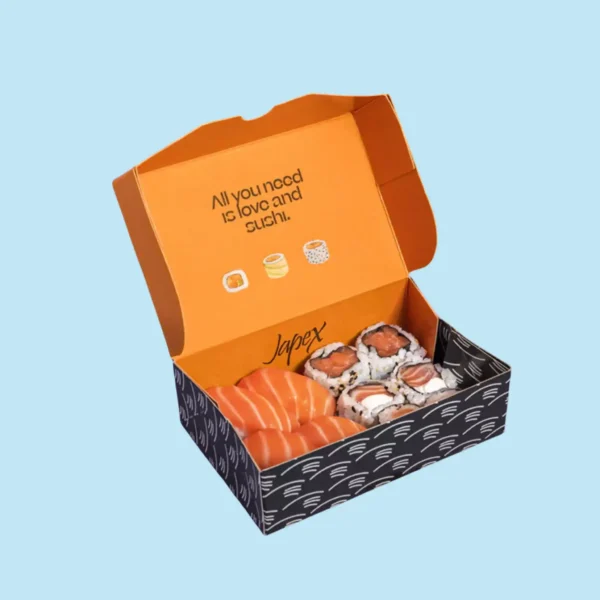
Branded sushi boxes may include Japanese-inspired patterns, minimal typography, illustrations, flavour labels, or location-specific designs.
Printed sushi boxes can support seasonal menus, limited-edition combinations, and restaurant promotions. Furthermore, personalised sushi boxes can include event names, customer details, or corporate branding.
Customized sushi boxes may use one design system across lunch packs, party platters, catering trays, and subscription meals.
Sushi packaging with clear window areas should keep critical branding away from the main food display. Accordingly, logos and product information can sit around borders or on sleeves.
In addition, printed labels can help distinguish spicy, vegetarian, cooked, and raw selections without opening the box.
In our manufacturing experience, sushi packaging looks more premium when the artwork frames the food instead of competing with it.
Material selection should reflect moisture, refrigeration, food visibility, printing, and delivery time.
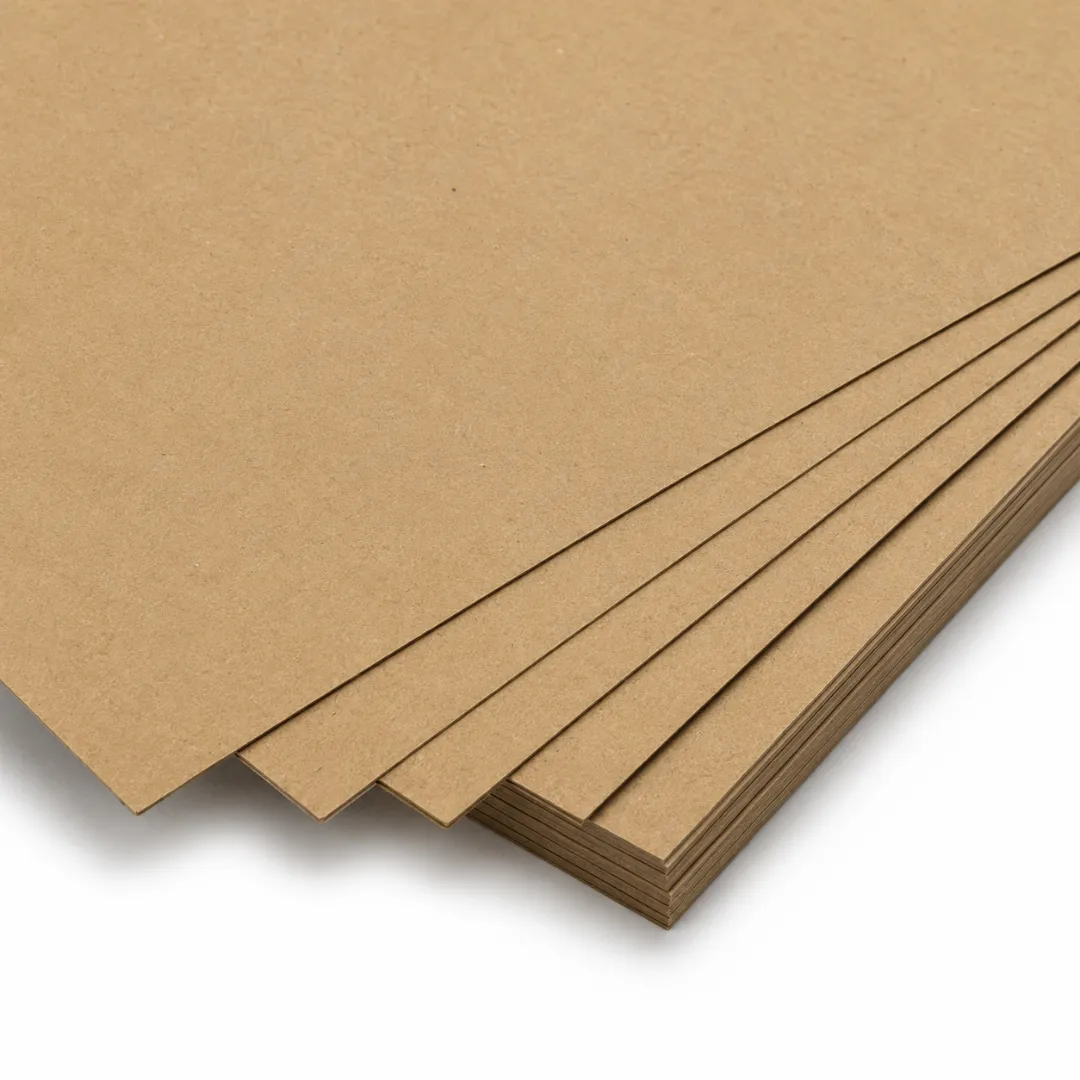
Kraft paper sushi boxes can create a natural or modern restaurant appearance. They may use windows, inserts, sleeves, or one-colour printing.
Paper sushi boxes offer a broad branding surface and can be supplied flat. Paperboard sushi boxes may use coatings or internal barriers depending on food contact and moisture requirements.
Cardboard sushi boxes can describe several board types, so the exact grade and coating should be confirmed before production.
Plastic sushi trays provide moisture resistance and clear-lid compatibility. PET sushi containers are often used where clarity matters, while PP sushi containers may suit different temperature conditions.
Recyclable sushi boxes should only be described that way when the complete material combination, coating, lid, adhesive, and local recycling conditions support the claim.
Food-grade sushi packaging should use materials, inks, adhesives, and coatings appropriate for the intended application.
Additionally, cold-food packaging boxes should be tested after refrigeration because some materials behave differently once exposed to moisture and temperature changes.
In our manufacturing experience, material failures often occur when a visually suitable paperboard is selected without testing it against chilled rice and condensation.
Premium sushi packaging can strengthen presentation for chef selections, private events, corporate catering, and special menus.
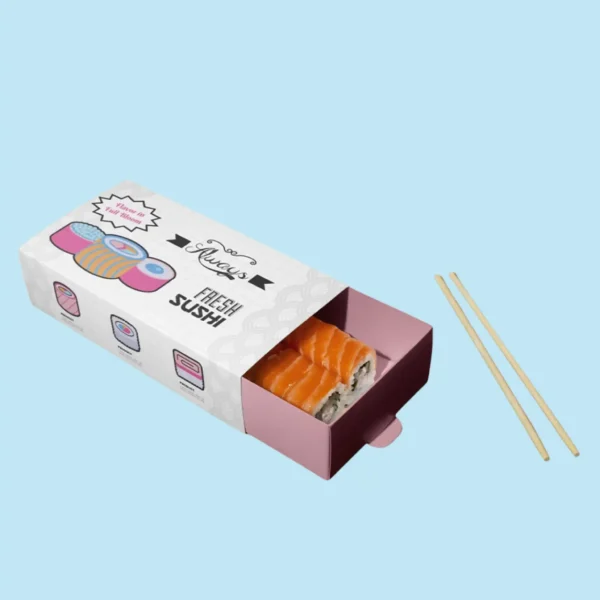
Luxury sushi boxes may use rigid board, drawer-style structures, sleeves, foil details, embossed logos, or printed interiors.
Sushi catering boxes can hold large assortments, while sushi platter boxes may use reinforced bases and clear display lids.
Sushi party boxes can include labelled sections for rolls, nigiri, sashimi, ginger, wasabi, and sauces. Moreover, sushi boxes for catering may include handles or outer carriers.
A premium sushi gift set can use an insert, menu card, chopstick holder, and branded sleeve. For other structured food gifts, our Sweet Boxes demonstrate how compartments and premium presentation can support curated assortments.
Sushi packaging for events may also include names, dates, corporate branding, or themed artwork.
Furthermore, the inner food-contact tray can be designed separately from the decorative outer box so each component performs its own function.
In our manufacturing experience, catering packaging performs best when the base is strong enough to stay level while being lifted from both sides.
Some restaurants and hospitality brands want packaging that feels more like a premium gift box than a disposable takeaway tray.
Rigid sushi presentation boxes may use lift-off lids, drawer structures, magnetic closures, or printed sleeves. These formats can support chef selections, corporate gifting, and private dining.
The internal structure should still account for chilled food and moisture. Therefore, food-contact trays or liners may sit inside the premium outer box.
For comparison, our Cake Boxes use reinforced bases and protective height around delicate food products. Sushi packaging applies similar structural thinking but requires different compartment and refrigeration considerations.
Premium food packaging should remain practical. Additionally, the outer box should not make it difficult for customers to remove the tray.
In our manufacturing experience, premium sushi boxes work best when the decorative outer structure and food-contact tray are developed as separate but coordinated components.
Sushi boxes for restaurants should support fast packing, refrigerated storage, order identification, and customer handling.
Sushi boxes for cafés may use compact formats for small roll selections, lunch combinations, or grab-and-go displays. Additionally, cafés often benefit from packaging that balances visual presentation with quick service during busy lunch periods.
Sushi boxes for food trucks should assemble quickly and use limited storage space. Similarly, sushi boxes for cloud kitchens should support fast order checking and delivery handoff.
Sushi packaging for small businesses can help new restaurants and takeaway brands create professional presentation without holding excessive inventory.
Sushi packaging for meal prep may use divided trays and clear labels. Furthermore, sushi packaging for food trucks can include compact cartons and sauce compartments.
Commercial sushi packaging can be coordinated across individual lunches, family meals, and catering orders.
In our manufacturing experience, food-service businesses benefit most from standardising a small number of core tray sizes instead of managing too many similar formats.
Retail sushi packaging must support visibility, stacking, refrigeration, labelling, and fast product identification.
Sushi boxes for supermarkets and sushi boxes for grocery stores often require clear visibility, stackability, labels, and secure closures.
Clear lids can help shoppers assess portion size and arrangement without opening the container. Moreover, black or printed bases can create stronger contrast with rice, fish, and colourful garnishes.
Retail packs may also need dedicated areas for barcodes, ingredient labels, use-by dates, storage guidance, and allergen information.
Stackable sushi containers should align cleanly without placing pressure on the food below. Consequently, lid height and tray stiffness should be tested under realistic shelf conditions.
Sushi boxes for supermarkets may use consistent footprints across several meal sizes to simplify refrigerated display planning. In addition, sleeves or labels can distinguish product ranges without changing the main tray.
In our manufacturing experience, retail packaging performs best when the lid stays clear enough for display while the label remains easy to read from the front or top.
Pop-up stalls and markets require packaging that is easy to transport, display, fill, and hand to customers.
Sushi packaging for events should protect food while keeping the product visible. Clear lids and printed sleeves can help customers choose quickly.
Sushi boxes for catering may need larger formats, reinforced bases, and condiment sections. Meanwhile, sushi boxes for food trucks should use compact storage and fast assembly.
Sushi takeaway packaging should remain stable on temporary tables and inside portable refrigerators. Additionally, labels should be easy to apply during busy service periods.
For outdoor selling, the packaging plan should account for temperature control, sunlight, and customer carrying distance.
In our manufacturing experience, market packaging performs best when empty boxes stack compactly and filled packs remain level on limited counter space.
A sushi subscription box usually refers to recurring meal delivery rather than an empty packaging format.
Packaging for subscription services should support consistent portioning, clear labelling, delivery scheduling, and repeat brand recognition.
Sushi boxes for subscription services can use coordinated sleeves, date labels, menu cards, and tamper-evident seals. Moreover, several tray sizes can support different subscription plans.
The outer packaging may contain multiple individual sushi meals, sauces, chopsticks, and refrigeration guidance.
Sushi packaging for meal prep may use compartments for sides and condiments. However, recurring deliveries should still account for the short shelf life and temperature requirements of sushi.
Furthermore, consistent tray sizes can simplify packing, route planning, and branded outer-carrier design.
In our manufacturing experience, subscription packaging becomes easier to manage when the outer carrier fits a standard number of identical meal trays.
Sushi boxes for delivery should resist movement, remain closed, and keep the meal level.
Sushi delivery packaging may use secure lids, inserts, sauce compartments, and tamper-evident labels.
Sushi takeout packaging should be easy for restaurant staff to inspect before handoff. Furthermore, sushi packaging for takeaway restaurants may include order numbers or customer names.
Sushi boxes for DoorDash orders and sushi boxes for Uber Eats orders should account for vehicle movement and multiple bags being carried together.
Sushi packaging for food delivery can also use outer carriers that keep several individual meals upright.
Delivery sushi containers should stack without placing pressure on clear lids. Protective sushi boxes may use reinforced edges or close-fitting trays.
Additionally, the outer bag or carrier should fit the container closely enough to reduce sliding during transport.
In our manufacturing experience, delivery failures usually begin when containers slide inside an oversized paper bag or outer carrier.
Prime Custom Packaging supports restaurant openings, menu launches, seasonal promotions, recurring takeaway service, catering, and high-volume food programmes.
Zero MOQ allows independent restaurants, food trucks, cloud kitchens, caterers, and growing food businesses to order according to current needs.
Sushi boxes wholesale can be coordinated across roll boxes, nigiri trays, sashimi packs, bento meals, and party platters.
Custom sushi boxes wholesale may reduce per-unit costs when setup expenses are spread across larger quantities. However, pricing also depends on dimensions, materials, clear lids, compartments, printing, finishes, and order volume.
Sushi containers wholesale can support restaurants, cafés, caterers, supermarkets, and hospitality businesses.
Wholesale sushi containers may combine black trays, clear lids, printed sleeves, and security labels. In addition, sushi packaging boxes wholesale can include multiple sizes under one branded system.
Bulk sushi boxes can support regular takeaway and delivery operations. Similarly, sushi boxes in bulk may include several meal sizes and compartment layouts.
Bulk sushi containers can be coordinated for lunch orders, family combinations, and catering. Sushi trays wholesale may also support supermarket counters and high-volume kitchens.
Disposable sushi containers wholesale can provide practical food-service packaging, while sushi takeout containers wholesale can include trays, lids, sleeves, and labels.
Sushi boxes wholesale USA can be supplied for restaurants operating across different states and service models.
Restaurant sushi containers wholesale and food-service sushi containers can support standardised operations across franchises and multi-location businesses.
Moreover, wholesale programmes can combine everyday takeaway trays with premium catering and event formats under one visual identity.
In our manufacturing experience, wholesale programmes work most efficiently when restaurants use a limited number of tray footprints with different inserts or sleeves.
Free design support and free shipping throughout the USA help simplify the overall ordering process.
Prime Custom Packaging develops custom sushi packaging around food arrangement, tray depth, moisture, refrigeration, sauces, presentation, and delivery conditions.
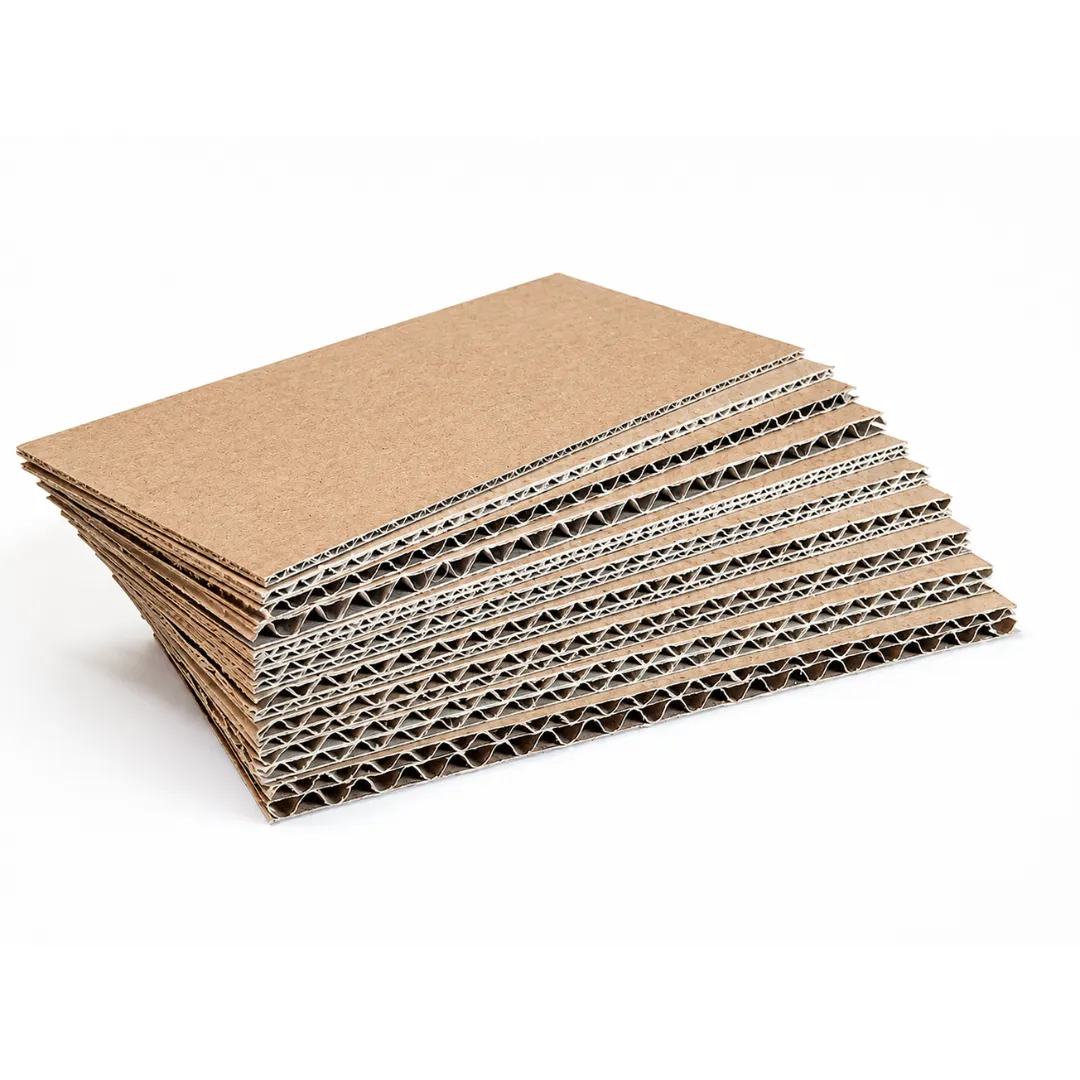
Choose kraft paperboard, white paperboard, corrugated stock, plastic trays, clear lids, rigid outer boxes, or hybrid systems.
Furthermore, you can add inserts, compartments, sauce sections, utensil holders, windows, tamper-evident labels, sleeves, and custom closures.
Our zero MOQ policy supports small restaurants, cafés, food trucks, cloud kitchens, supermarkets, caterers, hospitality brands, and multi-location food businesses.
Free structural and artwork support helps identify potential issues with tray dimensions, lid height, condensation, sauce placement, insert fit, print visibility, and stacking.
Digital proofs and three-dimensional mock-ups may be prepared, while physical sampling can be discussed where appropriate.
Moreover, our manufacturing approach considers the meal arrangement, food-contact tray, lid, printed outer structure, and delivery process together.
Free shipping is available throughout the USA, and production scheduling depends on material, quantity, proofing, printing, inserts, lids, and finishing requirements.
Get a free quote and discuss your sushi portions, arrangement, materials, clear lids, compartments, branding, and delivery needs with our team.
Begin by measuring the finished sushi arrangement at its widest and tallest points.
Confirm the number of rolls, nigiri pieces, sashimi slices, side items, sauces, and utensils included in each meal.
Explain whether the packaging is intended for restaurant takeaway, supermarket display, catering, food delivery, subscription meals, or premium gifting.
Choose the material, tray colour, lid type, compartments, inserts, condiment areas, printing method, colours, labels, and finishes.
Review the dieline and artwork proof carefully. Check dimensions, locking points, clear areas, insert cavities, sauce placement, text, branding, and label positions.
Before placing a larger order, test the packaging with the complete chilled meal. This helps identify condensation, movement, lid contact, leakage, stacking issues, and packing speed.
Additionally, test the filled packs inside the intended delivery bag, carrier, refrigerator, or retail shelf arrangement.
After approval, production can begin according to the agreed specifications and schedule. Consequently, the completed packaging is prepared for free shipping throughout the USA.
In our experience, photographs of the finished meal arrangement improve structural accuracy and reduce unnecessary revisions.
The right sushi packaging protects arrangement, supports chilled handling, improves delivery stability, and strengthens restaurant branding.
Prime Custom Packaging creates custom sushi boxes for rolls, nigiri, sashimi, hand rolls, bento meals, party platters, supermarket displays, catering, subscriptions, takeaway, and delivery.
Choose the exact dimensions, tray, lid, window, compartments, inserts, sauce areas, printing, and finishes required for your menu.
Whether you need a single sushi container, premium sashimi box, paper sushi cartons, clear-lid trays, or bulk restaurant packaging, every component can be customised around your operation.
Our custom sushi boxes are developed around portion size, presentation, refrigeration, takeaway handling, and restaurant branding. Furthermore, every structure can be tailored for individual meals, family platters, catering orders, supermarket displays, subscription programmes, and restaurant takeaway service while maintaining a consistent branded appearance.
With zero MOQ, free design assistance, flexible production options, and free shipping throughout the USA, you can order packaging for a new menu launch or an established delivery programme.
Request your free quote today and create sushi packaging that protects every roll, topping, sauce, and branded detail.
| Box Style | Custom Sushi Boxes |
| Dimension (L + W + H) | All Custom Sizes & Shapes |
| Quantities | No Minimum Order Required |
| Paper Stock | 10pt to 28pt (60lb to 400lb) Eco-Friendly Kraft, E-flute Corrugated, Bux Board, Cardstock |
| Printing | No Printing, CMYK, CMYK + 1 PMS color, CMYK + 2 PMS colors |
| Finishing | Gloss Lamination, Matte Lamination, Gloss AQ, Gloss UV, Matte UV, Spot UV, Embossing, Foiling |
| Included Options | Die Cutting, Gluing, Scored, Perforation |
| Additional Options | Eco-Friendly, Recycled Boxes, Biodegradable |
| Proof | Flat View, 3D Mock-up, Physical Sampling (On request) |
| Turnaround | 4 – 8 Business Days, RUSH |
| Shipping | FLAT |