
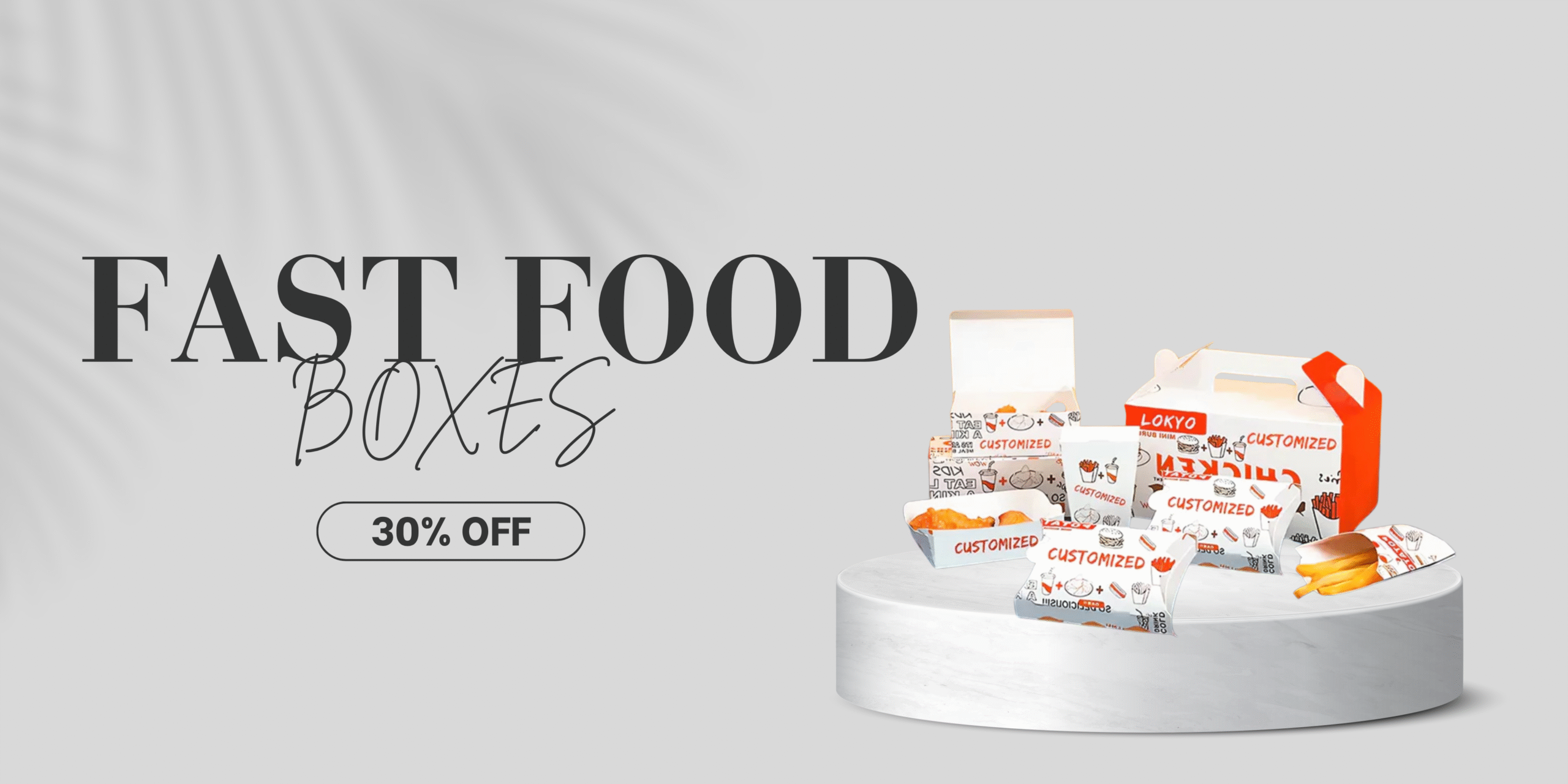
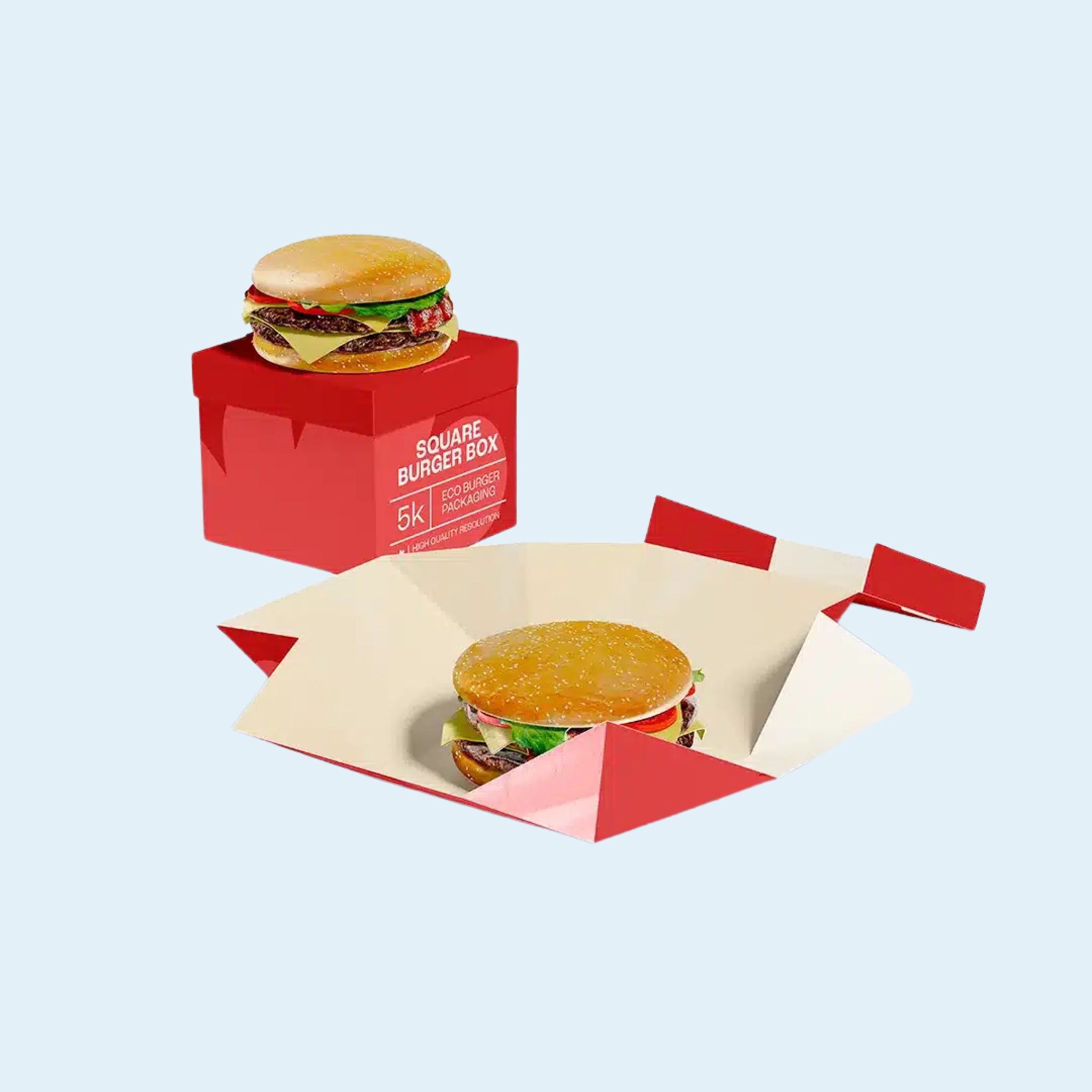
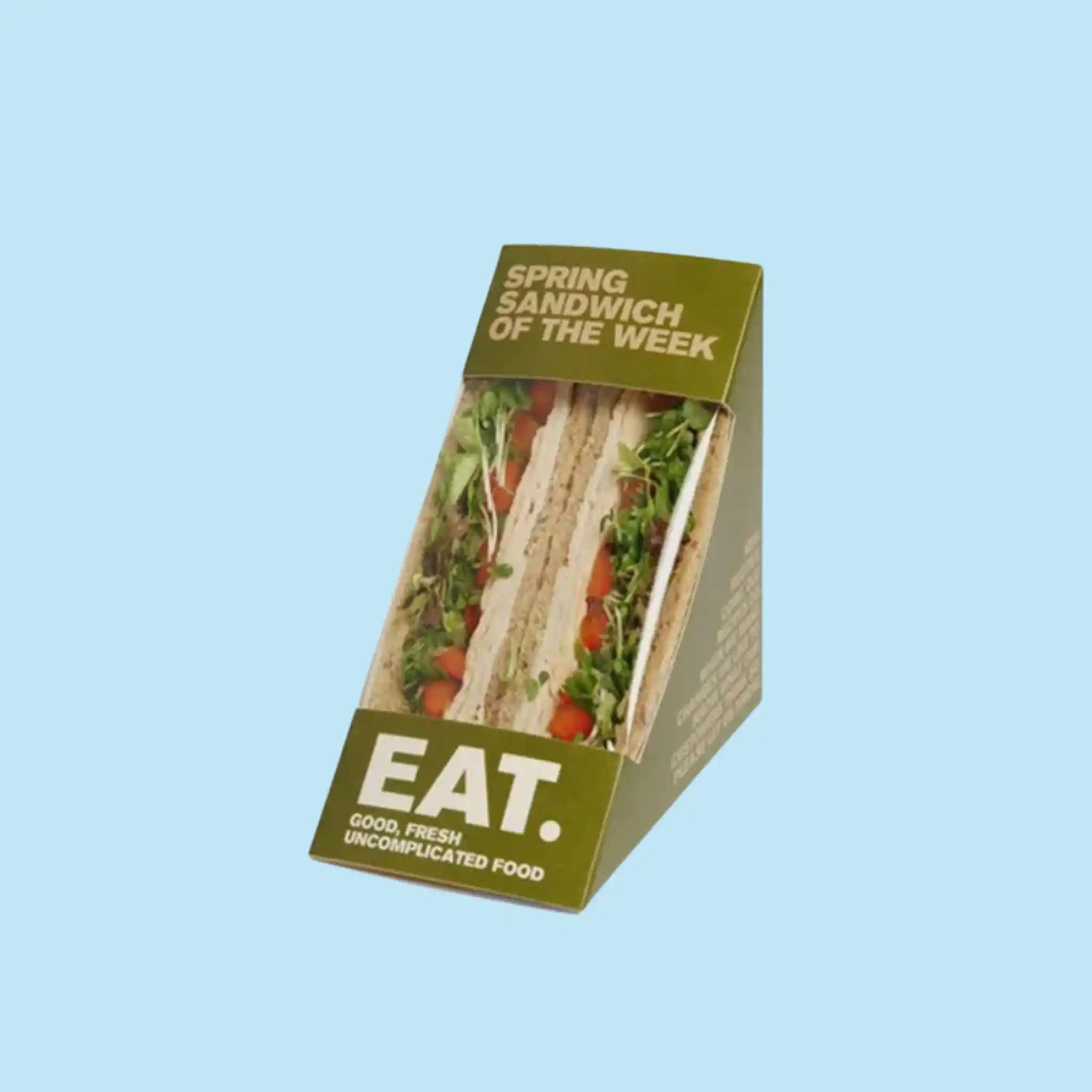
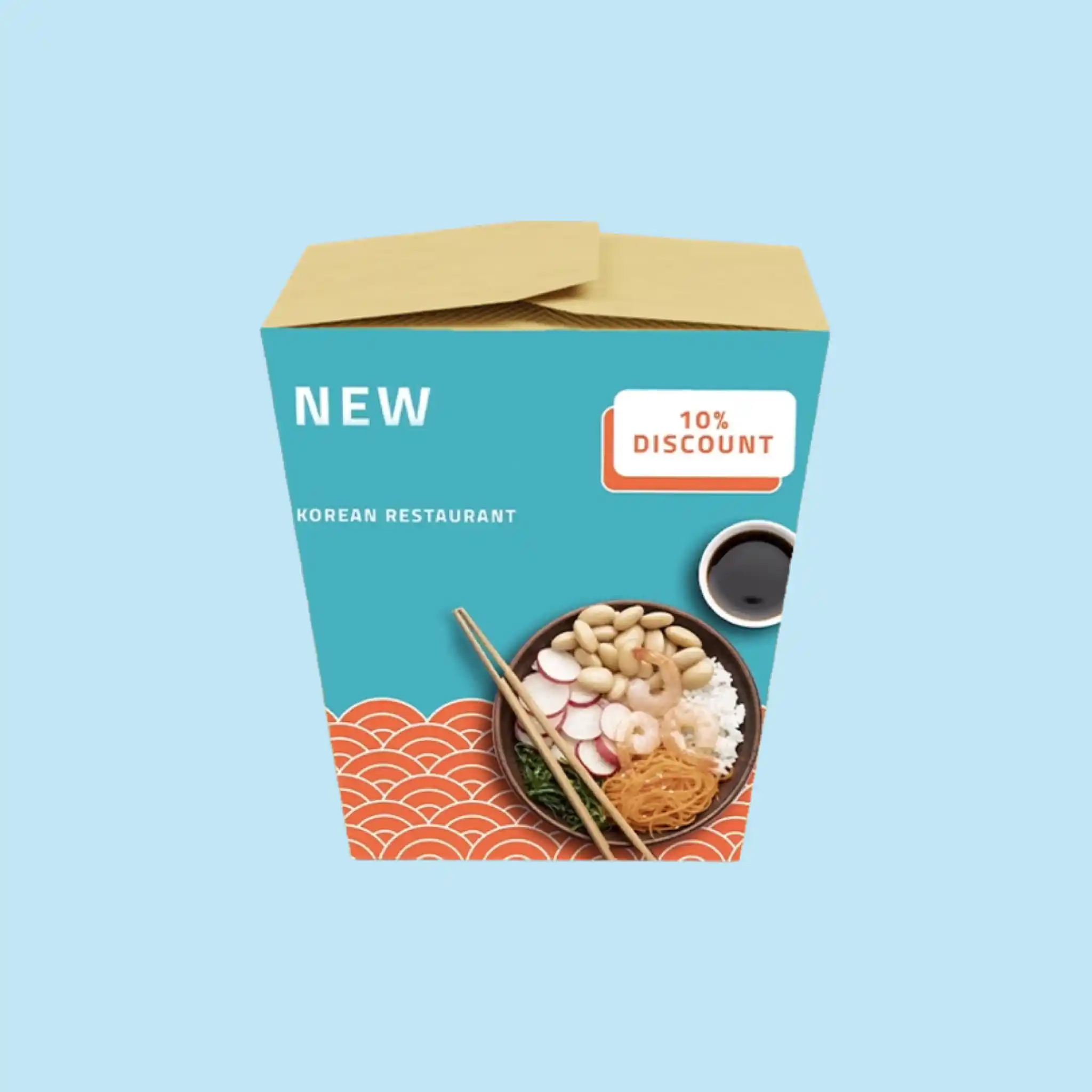
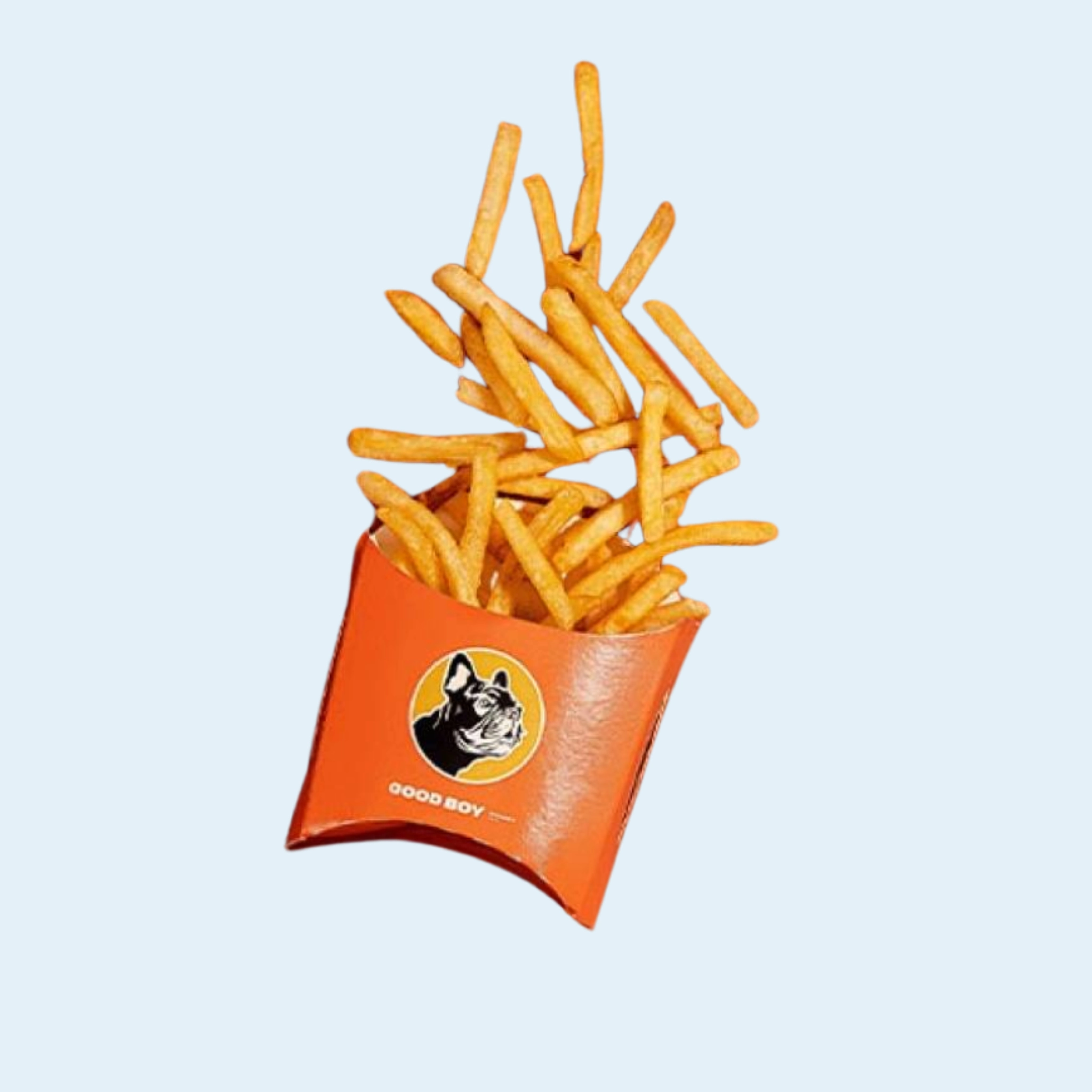
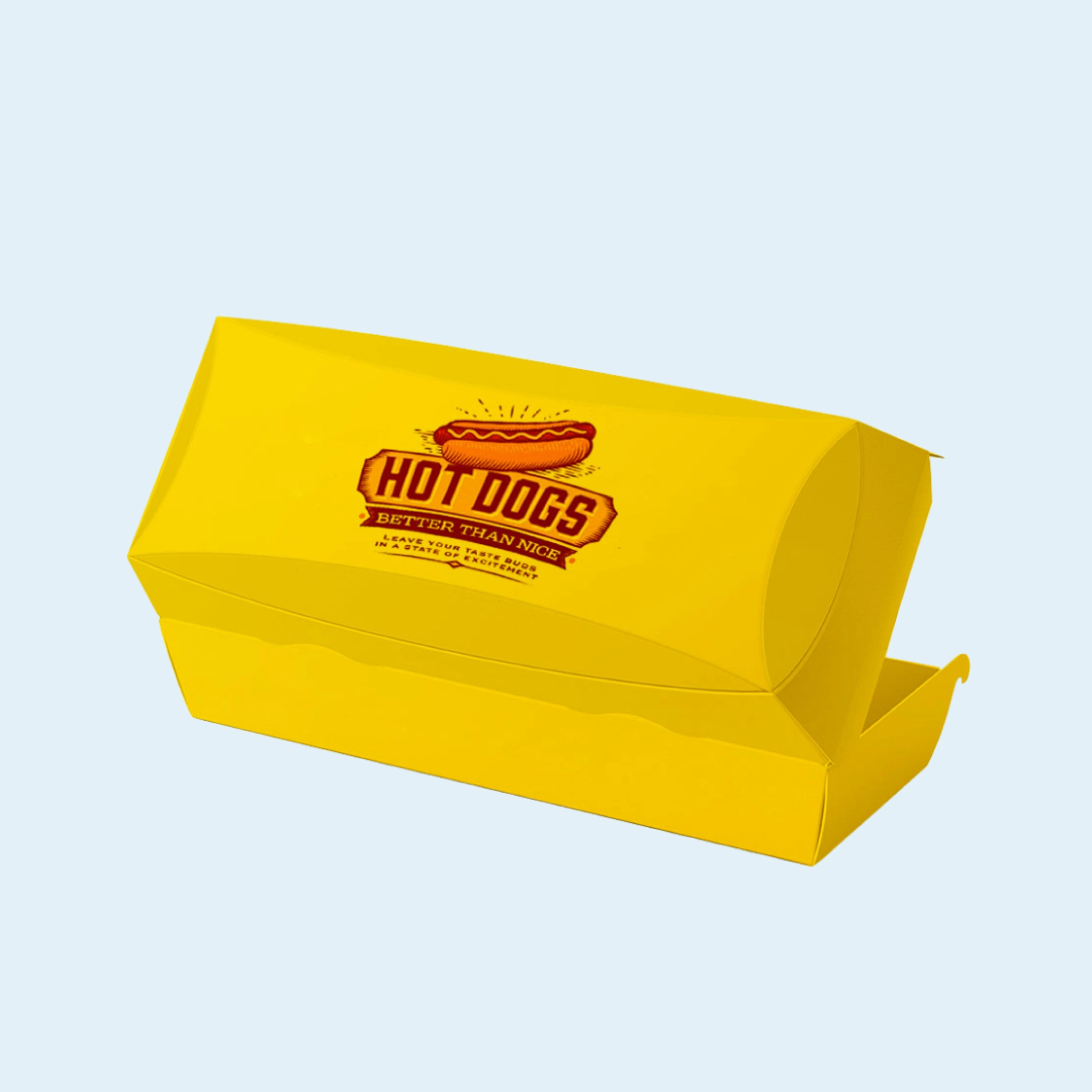
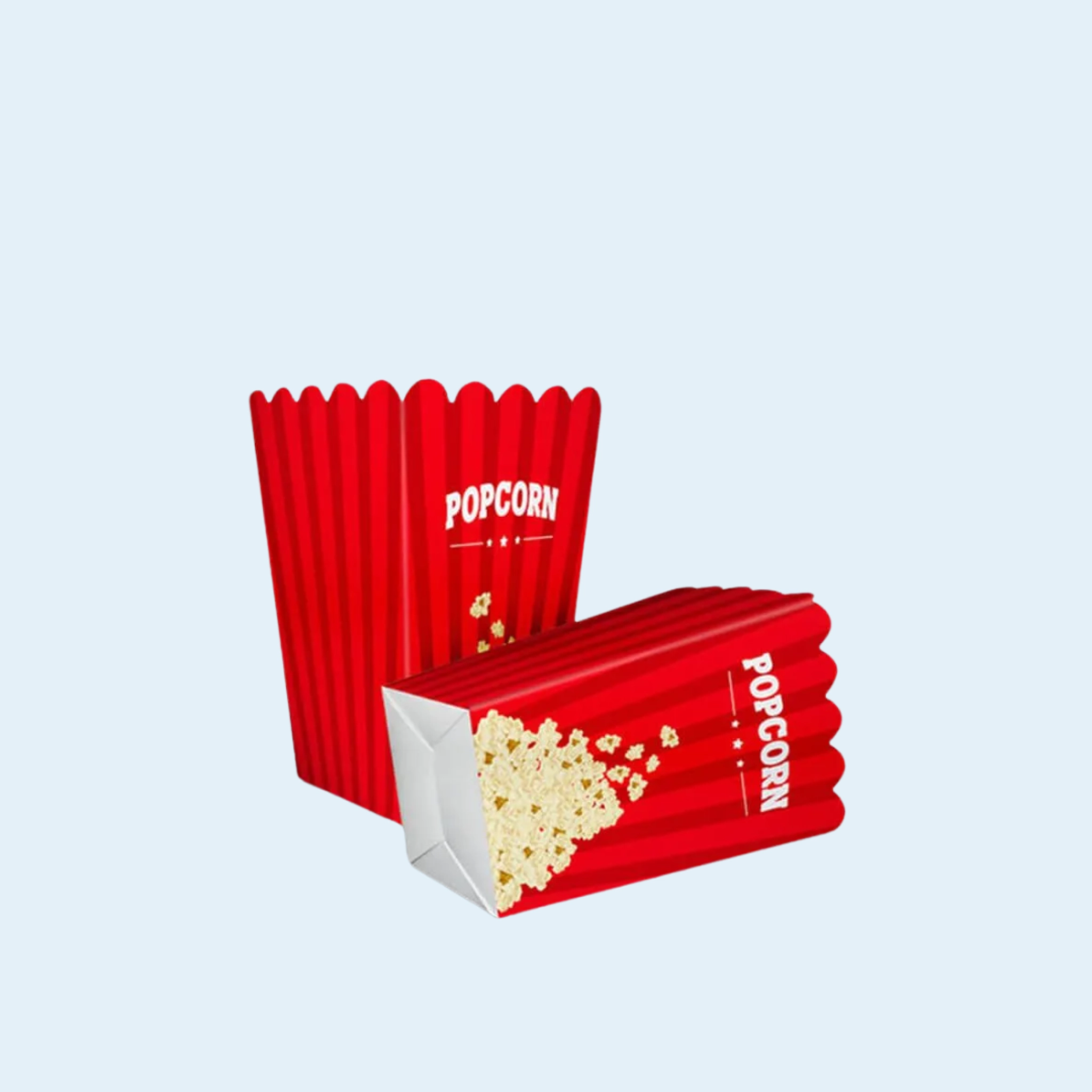
Fast food packaging has to survive conditions slower food formats never see: hot grease, a rushed handoff, a bag ride in a delivery car, and a customer who opens it within minutes of pickup. Custom Fast Food Boxes from Prime Custom Packaging are built specifically for that environment, covering burgers, sandwiches, takeout meals, hot dogs, fries, and popcorn in structures engineered to contain grease, vent steam, and hold their shape through a busy shift. Restaurants, food trucks, stadiums, and quick-service chains across the United States rely on this category whenever a standard box or bag cannot keep pace with high-volume, high-heat service. Every format is produced to the exact dimensions an order needs, printed with a brand’s own artwork, and shipped free nationwide with zero minimum order quantity.
Speed of service depends on packaging that works the first time, every time. A cashier folding hundreds of burger boxes per shift cannot afford a format that jams, tears, or leaks. That reliability, built into the structure itself rather than added after the fact, is the standard every format in this category is held to.
A generic box or bag forces grease-heavy, high-heat food into packaging that was never engineered for it, leading to soggy bottoms, leaked oil, and a poor unboxing moment for the customer. Custom Fast Food Boxes solve that gap with grease-resistant liners, ventilation built into the structure, and fold patterns designed for one-handed speed during peak rush hours. That combination is what keeps a burger crisp, a fry order hot, and a takeout meal intact from counter to car.
Corrugated E-flute board gives burger and takeout boxes the crush resistance to survive stacking in a delivery bag. Grease-resistant SBS paperboard handles fry and popcorn formats where oil contact is constant. Food-safe coated liners add an extra barrier for sandwich and hot dog wraps carrying condiments. The table below outlines the core material choices used across the category, matched to what each one is built to withstand. Restaurants comparing structural options for handheld items often start with Custom Burger Boxes before deciding on a full menu packaging lineup.
| Material | Typical Weight | Grease Resistance | Heat Tolerance | Best For |
| Corrugated E-flute | Lightweight, high crush strength | Moderate with liner | Good, vents heat well | Burger and takeout boxes |
| Grease-resistant SBS board | 14pt to 18pt | High, coated surface | Good for short hot contact | Fry boxes and popcorn packaging |
| Food-safe kraft wrap | Medium weight, flexible | Moderate, absorbent-resistant | Good, breathable | Sandwich and hot dog wraps |
| Laminated poly-coated board | 16pt to 20pt | Very high, sealed barrier | Excellent, holds heat longer | Extended-hold takeout containers |
| Recycled kraft corrugated | Lightweight, eco-focused | Moderate with coating | Good, standard venting | Eco-conscious quick-service brands |
Handheld items and boxed meals need genuinely different mechanics, not just different sizes. A burger box needs a clamshell hinge that closes one-handed during a rush, while a fry box needs a wide, shallow mouth that vents steam without going soggy. Takeout boxes need a folding lid that locks flat for stacking in delivery bags. The comparison below lines up the structural families across the category so an order can be matched to the exact menu item on the first run.
| Format | Core Structure | Primary Use | Typical Capacity | Standout Feature |
| Burger boxes | Clamshell hinge, locking front | Single burgers and sliders | 1 to 2 handheld items | One-handed close during rush service |
| Sandwich boxes | Flat-fold wrap or hinged tray | Wraps, subs, and paninis | Single sandwich portions | Grease-resistant fold-over seal |
| Takeout boxes | Folding lid, tuck-lock | Full meals and combo orders | One to three-item meals | Stacks flat for delivery bags |
| Hot dog boxes | Trough-style open tray | Hot dogs and loaded franks | Single to double servings | Open top for quick condiment access |
| Fry and popcorn packaging | Wide flat-bottom scoop or tub | Fries, onion rings, popcorn | Small to shareable sizes | Vented sides prevent sogginess |
Full CMYK printing reproduces a restaurant’s logo, menu graphics, and promotional messaging directly onto the box or wrap surface with consistent color across every production run. Pantone spot-color matching keeps a chain’s signature brand color exact whether the order ships to one location or fifty. Bold, high-contrast graphics work especially well on fast food formats, where packaging often doubles as in-hand advertising during delivery and pickup.
Grease-resistant coatings protect printed graphics from oil contact without dulling the artwork underneath. Matte finishes reduce glare under kitchen and counter lighting, while gloss finishes add shine for bold, color-forward quick service branding. Food-safe interior liners add a second layer of protection for condiment-heavy items. Restaurants building a complete packaging lineup often pair these finishes with Custom Takeout Boxes to standardize branding across dine-in, takeout, and delivery orders.
Single-serve formats fit one burger, hot dog, or wrap for grab-and-go counters. Combo formats hold a main item plus a side for standard meal orders. Shareable formats cover fries and popcorn sized for two or more. Bulk and catering formats support stadium concessions, food trucks, and large event orders. The table below gives typical dimension ranges so an order can be sized correctly before production begins.
| Size Category | Typical Dimensions | Common Contents | Order Volume | Notes |
| Single-serve | 4 x 4 x 2 in to 6 x 6 x 3 in | One burger, hot dog, or wrap | Individual counter orders | Fits standard handheld service |
| Combo meal | 7 x 7 x 3 in to 9 x 6 x 3 in | Main item plus a side | Standard quick-service meals | Common drive-thru and counter size |
| Shareable | 8 x 5 x 4 in to 10 x 8 x 4 in | Fries, onion rings, popcorn | Two or more servings | Wide mouth for even venting |
| Large combo | 10 x 10 x 4 in and up | Full meal with multiple sides | Family and group orders | Reinforced base for stacked contents |
| Bulk and catering | 12 x 10 x 6 in and up | Stadium and event concessions | High-volume foodservice | Corrugated construction for stacking |
Locking tabs keep clamshell burger boxes closed without extra tape during handoff. Vented lids let steam escape on fry and popcorn formats, keeping contents crisp instead of soggy. Grease-resistant liners add a barrier for sandwich and hot dog wraps carrying sauces. Fold-flat construction lets empty stock store compactly between rushes, saving counter and back-of-house space.
Quick-service restaurants and drive-thrus rely on clamshell burger boxes and combo takeout formats for high-speed service. Food trucks depend on lightweight, grease-resistant formats that hold up outdoors without a full kitchen setup. Stadiums, arenas, and event concessions use bulk and shareable formats built for high-volume, fast-turnover sales. Delivery-focused restaurants lean on stackable takeout boxes that survive a car ride intact. Businesses rounding out a full counter lineup sometimes add Custom Sandwich Boxes for wraps and panini service.
Restaurant groups and franchises scaling across multiple locations can standardize one dieline across every unit, keeping branding identical whether an order ships to one location or a hundred. Private label operators can pair unbranded stock formats with faster turnaround between menu changes. Growing order volume also unlocks better per-unit wholesale pricing without requiring a change in packaging format.
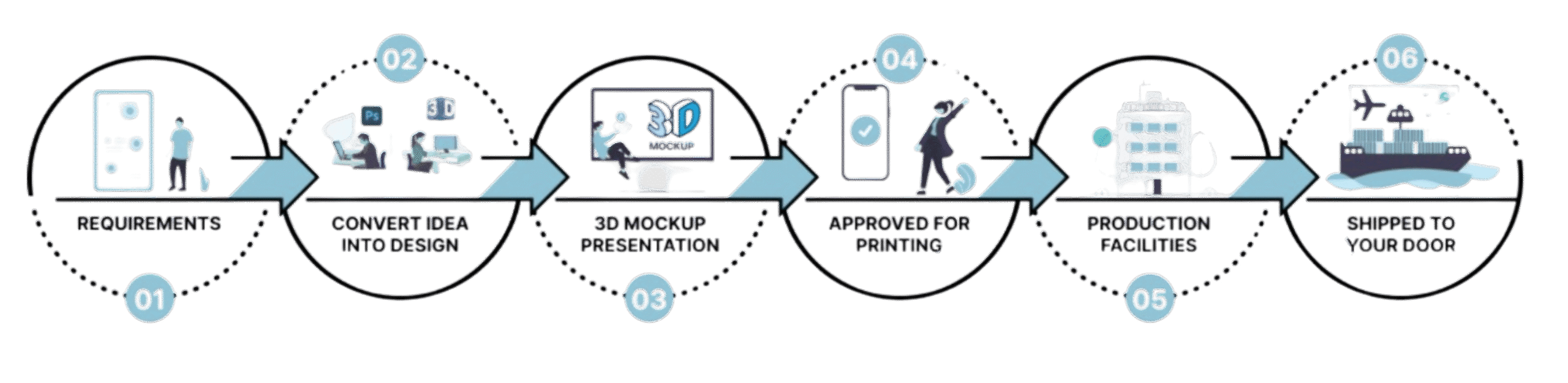
A single sample case and a full wholesale production run both move through the same streamlined process at Prime Custom Packaging. There is zero minimum order quantity, so testing a new Custom Fast Food Boxes format before a menu launch costs nothing extra upfront. Every order ships free across the United States regardless of size, keeping production timelines consistent whether a restaurant orders five hundred boxes or fifty thousand.
Our in-house design team builds a free dieline and mockup for every fast food order, showing exact proportions, vent placement, and fold mechanics before production starts. Revisions continue at no charge until the proof matches a brand’s menu identity and service speed requirements.
Every production run passes through a structural check confirming board weight, hinge strength, and lock mechanisms perform under repeated use. Color proofs are compared against approved Pantone references before full printing begins. Grease-resistance is verified through timed contact testing, and fit is checked against standard menu item dimensions so every box closes cleanly during a busy shift.
| Check | What We Verify | Applies To | Why It Matters | Method |
| Hinge and lock strength | Clamshell closure holds under repeated use | Burger and clamshell formats | Prevents reopening during handoff or delivery | Repeated-cycle stress testing |
| Grease resistance | Coating performance against oil contact | Fry, popcorn, and sandwich formats | Keeps packaging intact through service | Timed contact testing |
| Vent performance | Steam escape without sogginess | Fry and popcorn packaging | Keeps contents crisp, not soggy | Airflow and moisture testing |
| Color accuracy | Print output matched to Pantone reference | All printed formats | Keeps branding consistent order to order | Spectrophotometer comparison |
| Load and stack strength | Base and side panel resistance under weight | Takeout and bulk formats | Prevents collapse in delivery bags | Compression testing |
From quick-service chains in California and New York to food trucks and stadium concessions in Texas, Ohio, and the Southeast, Prime Custom Packaging ships this full Custom Fast Food Boxes category nationwide with no regional surcharge. Every state receives the same production quality, pricing structure, and turnaround, so packaging never slows down a restaurant’s expansion.
Whether the need is a single sample case for a new menu item or a full wholesale production run across burgers, sandwiches, takeout meals, and sides, Custom Fast Food Boxes from Prime Custom Packaging deliver a grease-resistant format and sharp branding at a cost that works for growing restaurants. Free design help, zero minimum order quantity, and nationwide shipping make dependable packaging accessible to businesses of any size.
Order Now or email sales@primecustompackaging.com or call +1 (855) 611-8876 for a free quote today.